Inside the Studio: What It Actually Feels Like to Make My Work
There’s a version of being an artist that looks clean from the outside.
Focused. Certain. Constantly inspired.
That isn’t what it feels like.
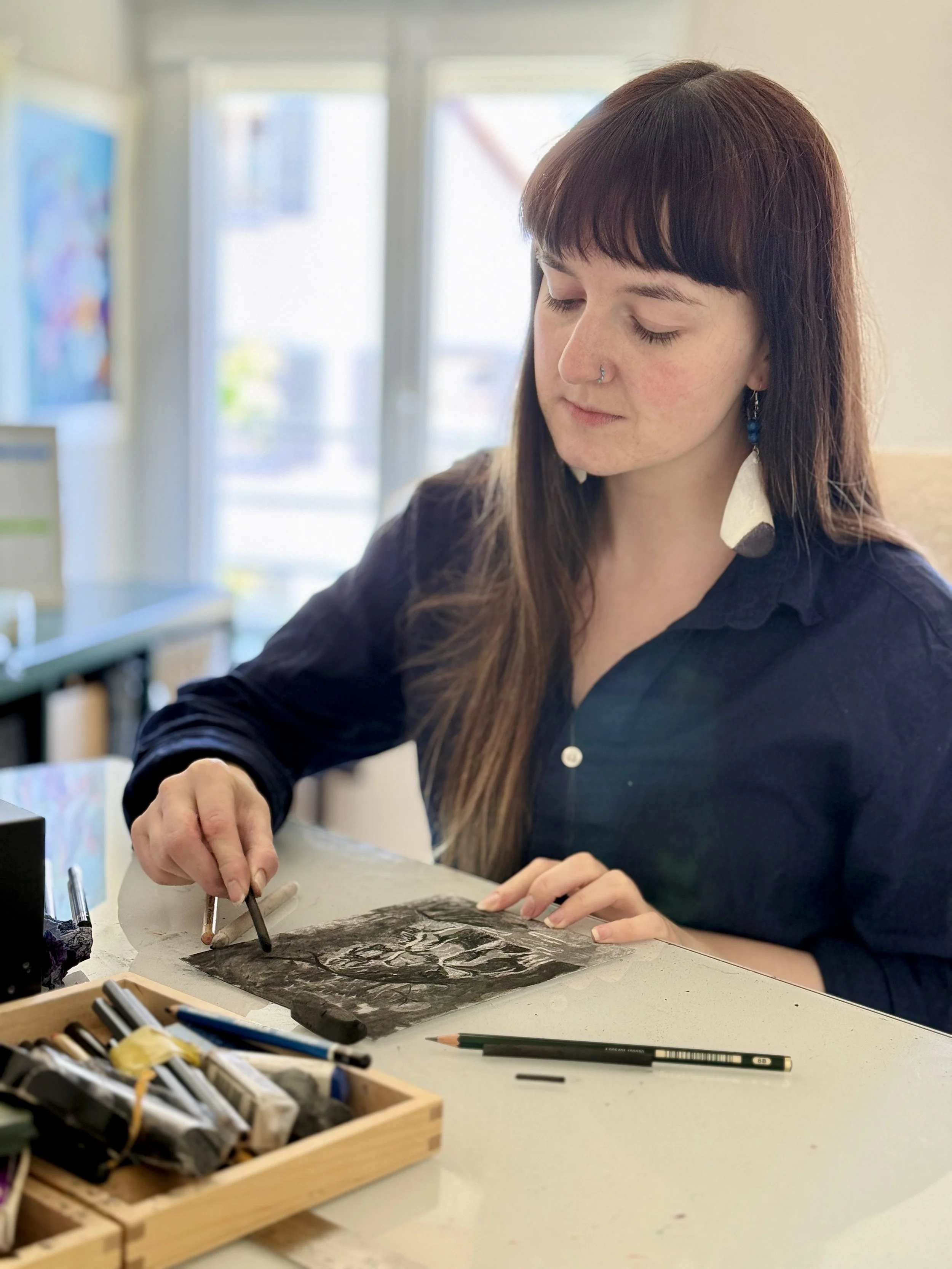
Most days, there is resistance before I even start. It’s not because I don’t love what I do, it’s the opposite. I care about it enough that I feel the weight of my own expectations before I’ve even picked up a brush. There’s an underlying fear that I won’t be able to bring what I see in my mind into something real.
But I go into the studio anyway.
And something always shifts.
The resistance dissolves once I start. A few marks on a surface is often enough. Then it becomes something else entirely, not thinking, not planning, but flowing. I can work for hours like this. It feels closer to meditation than effort. My mind gets quiet, and the work takes over. This is the part people don’t always see. That the beginning is often the hardest part. Not the making.
What people sometimes misunderstand
There’s a tendency to assume my work is fully intuitive or spontaneous, like I’m pulling everything directly from imagination.
That isn’t quite true.
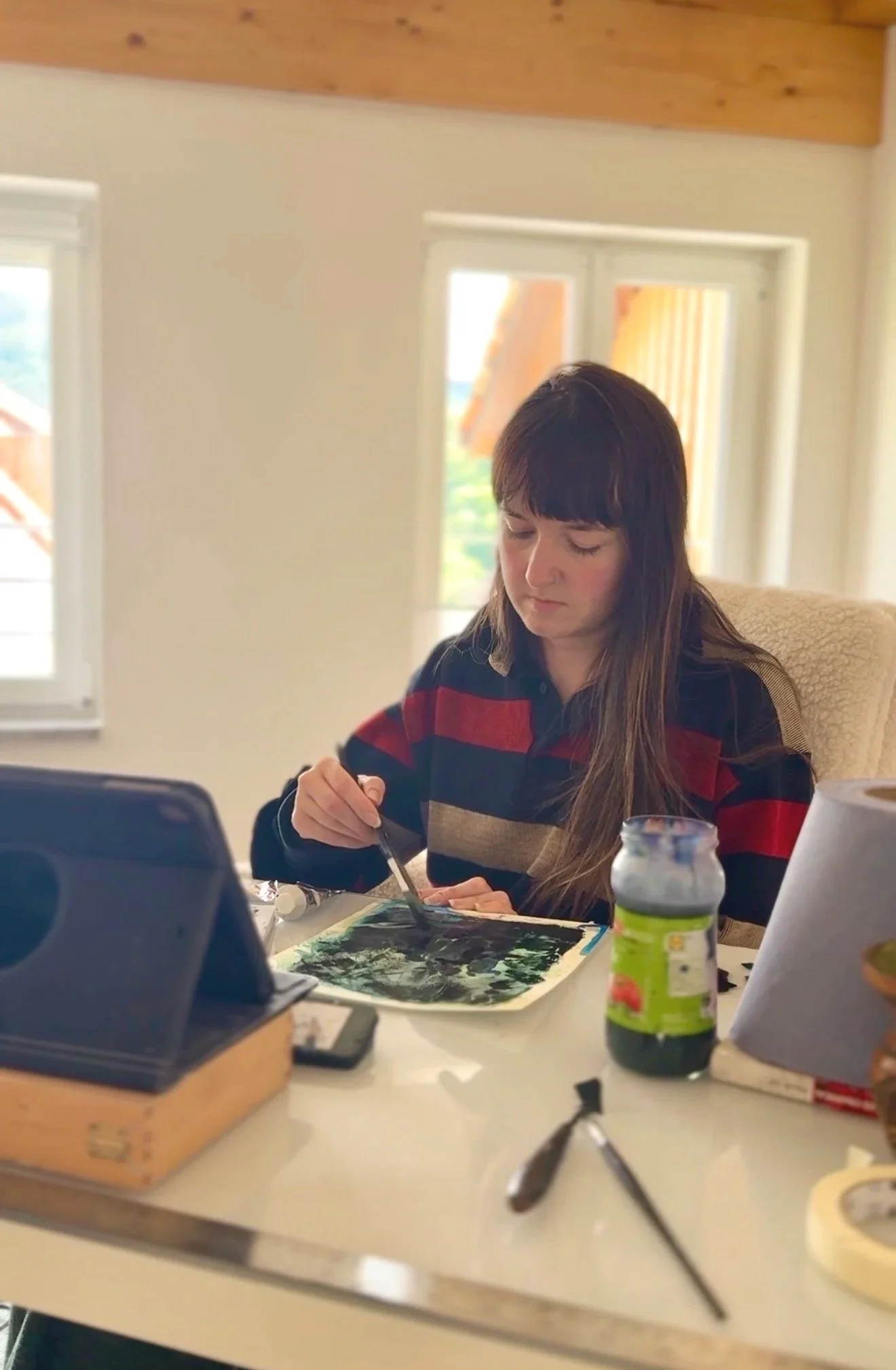
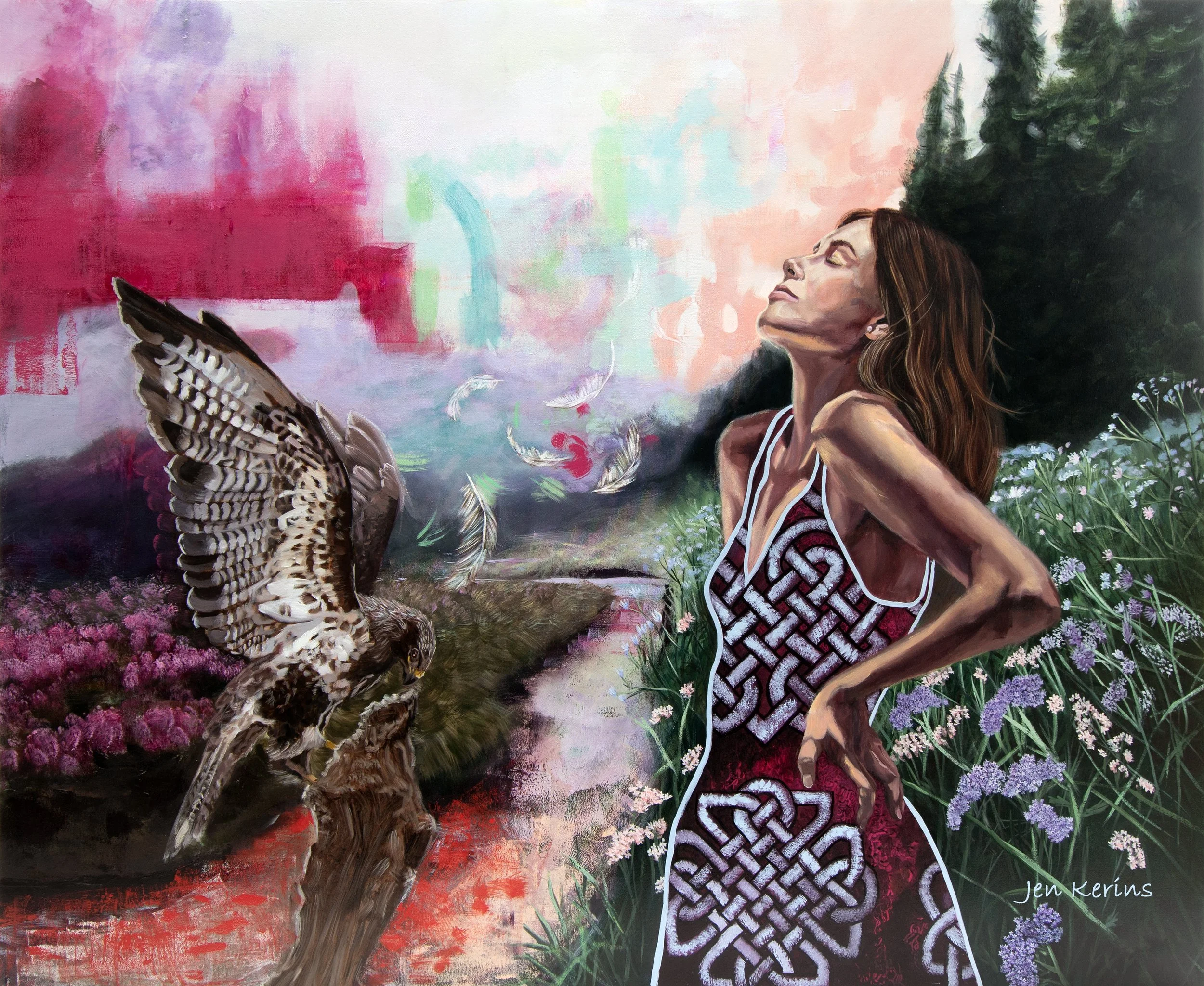
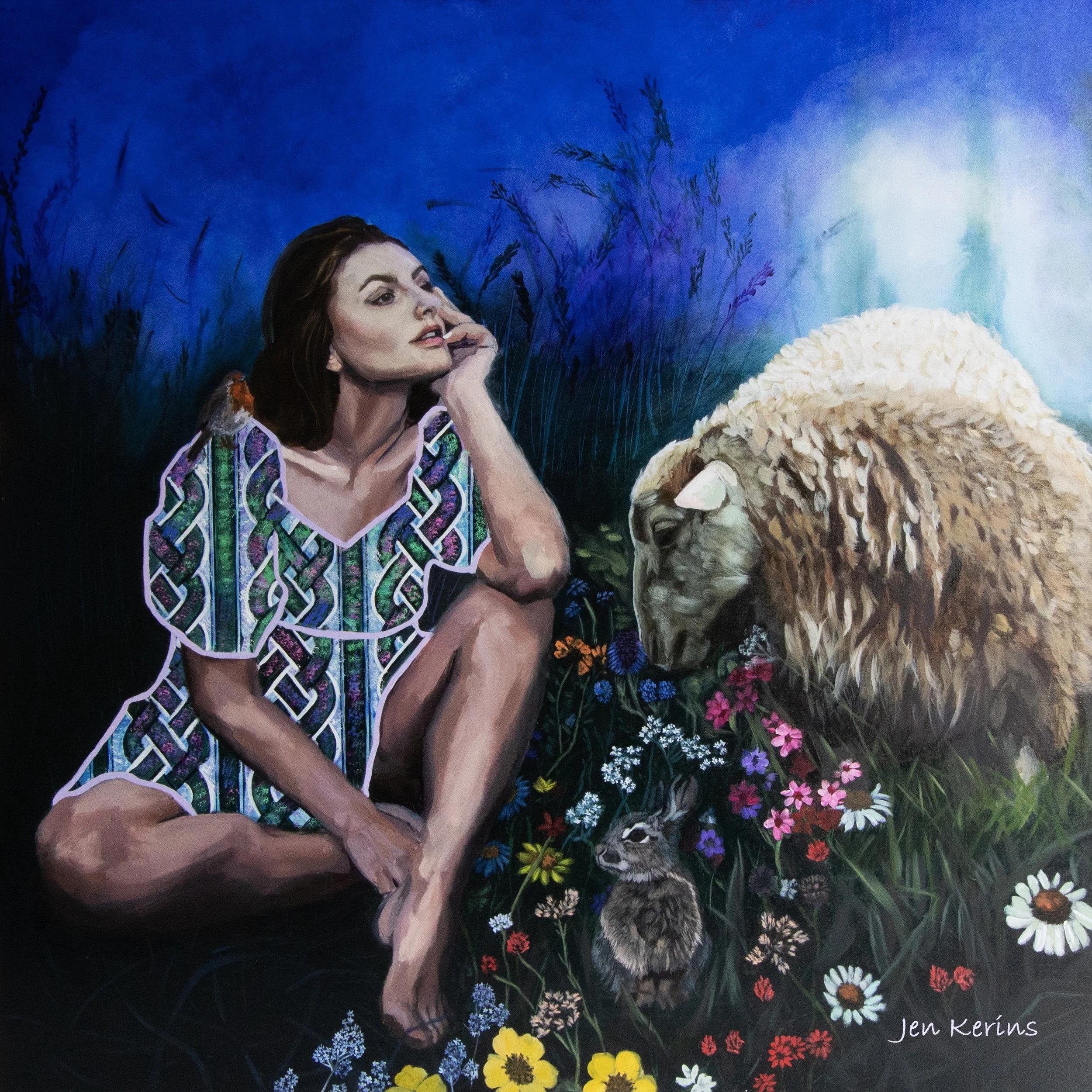
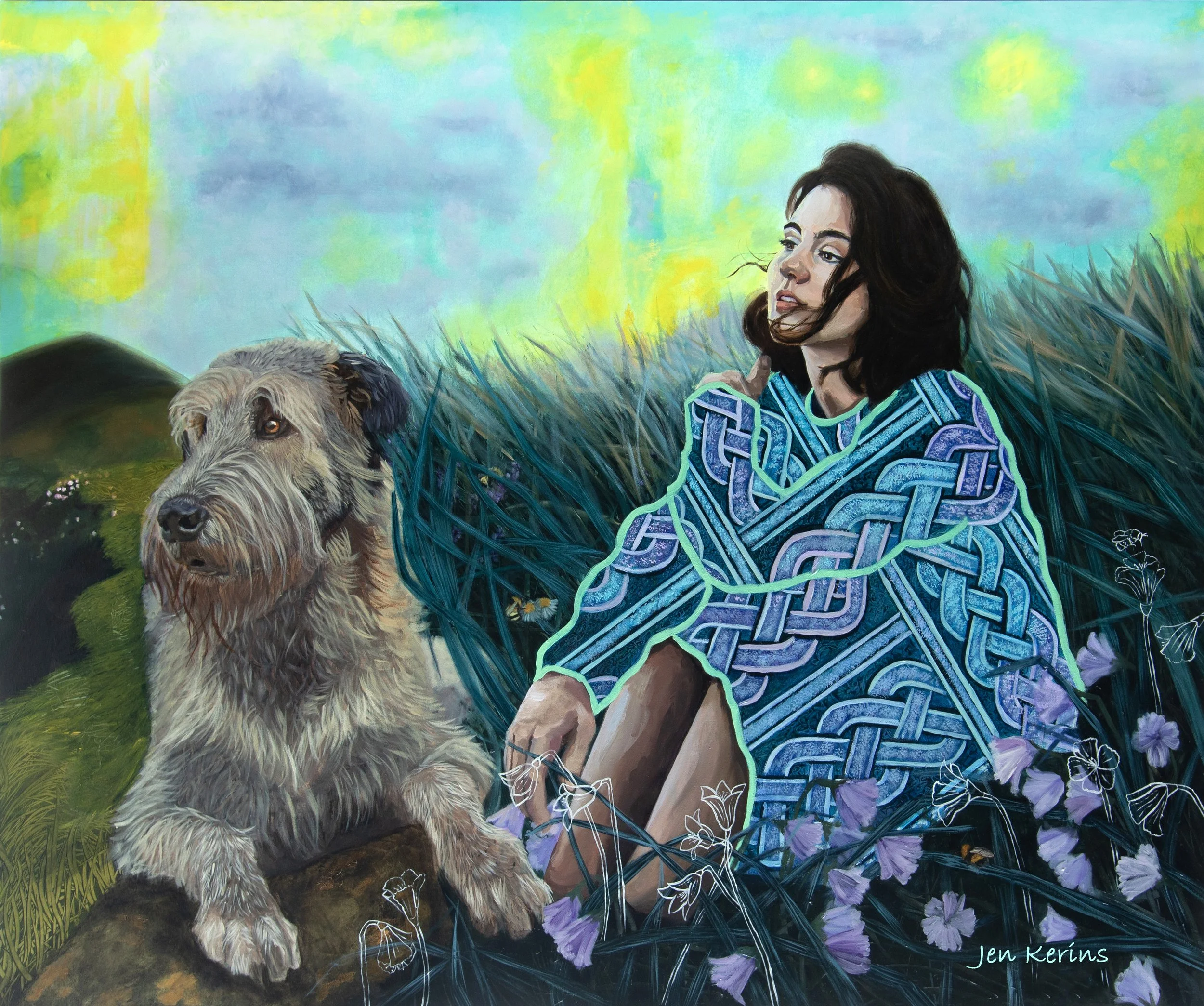
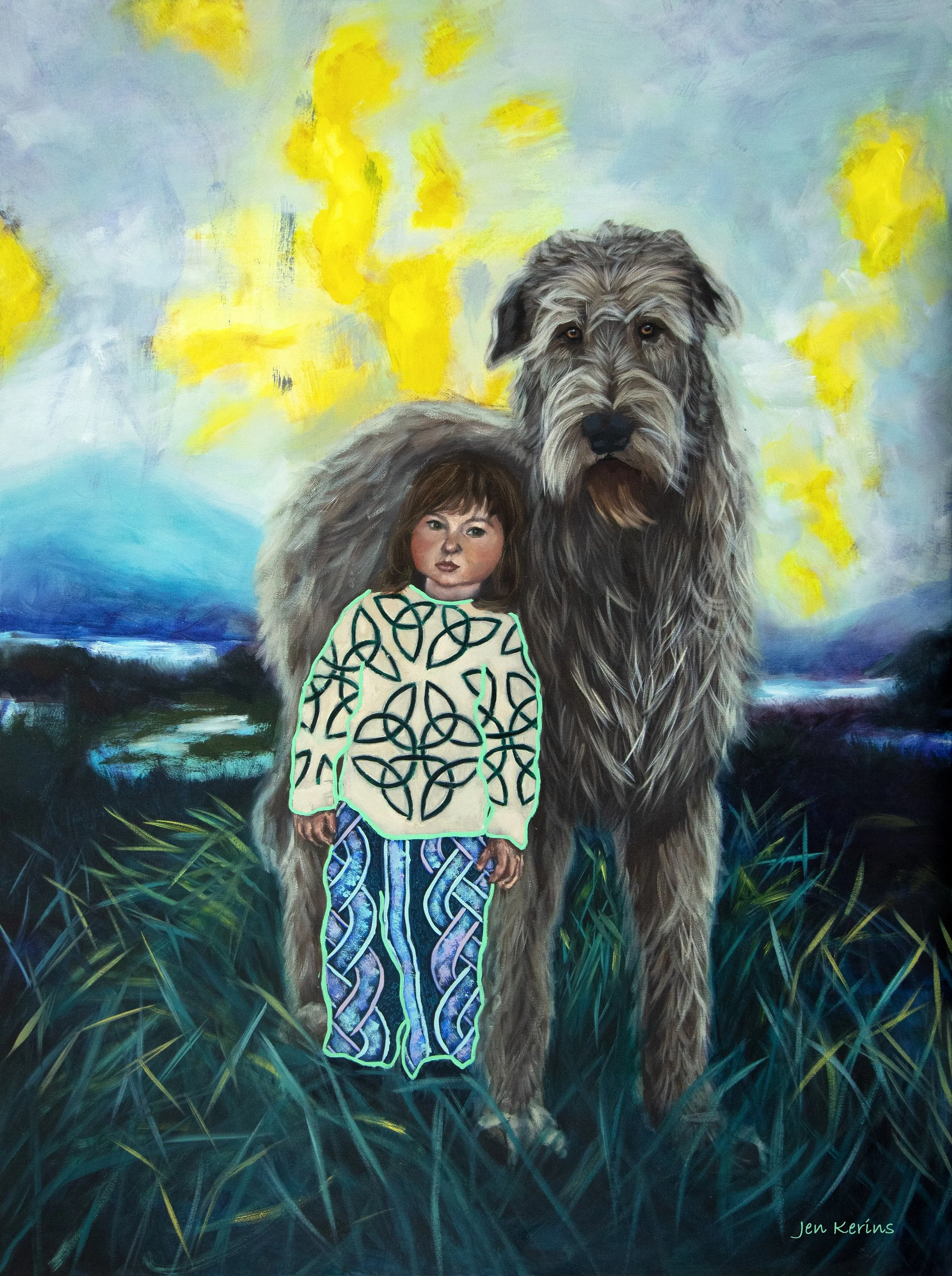
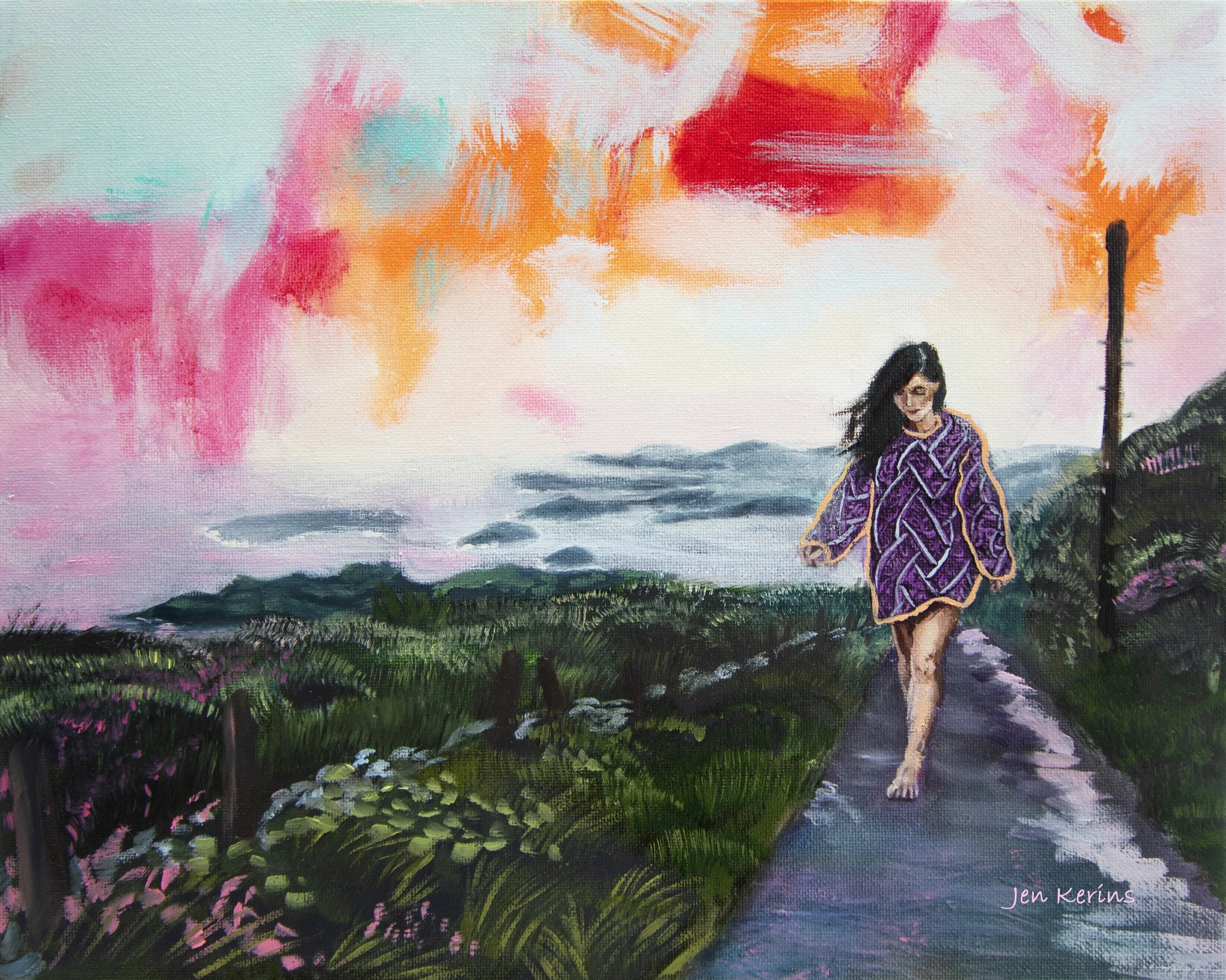
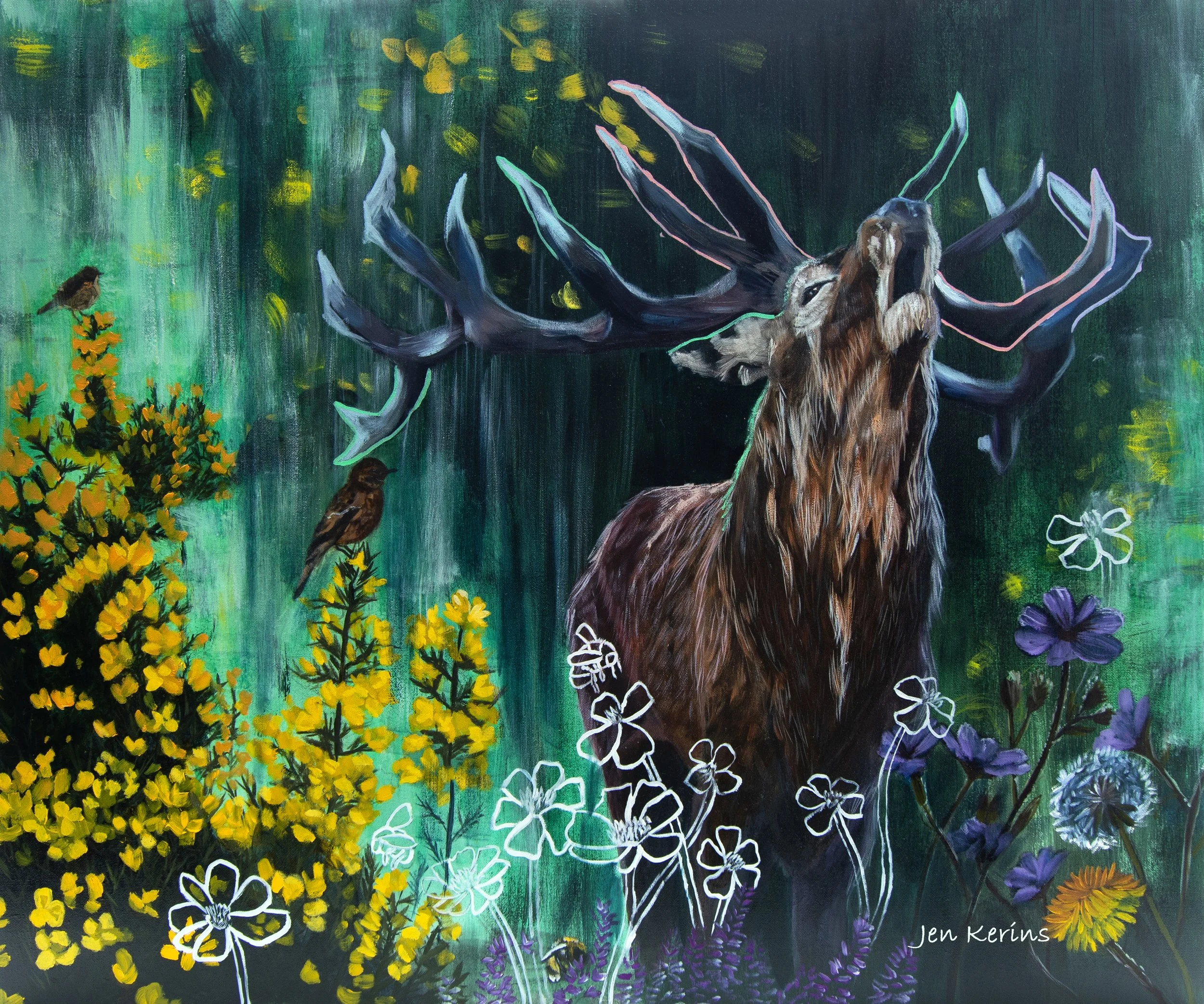
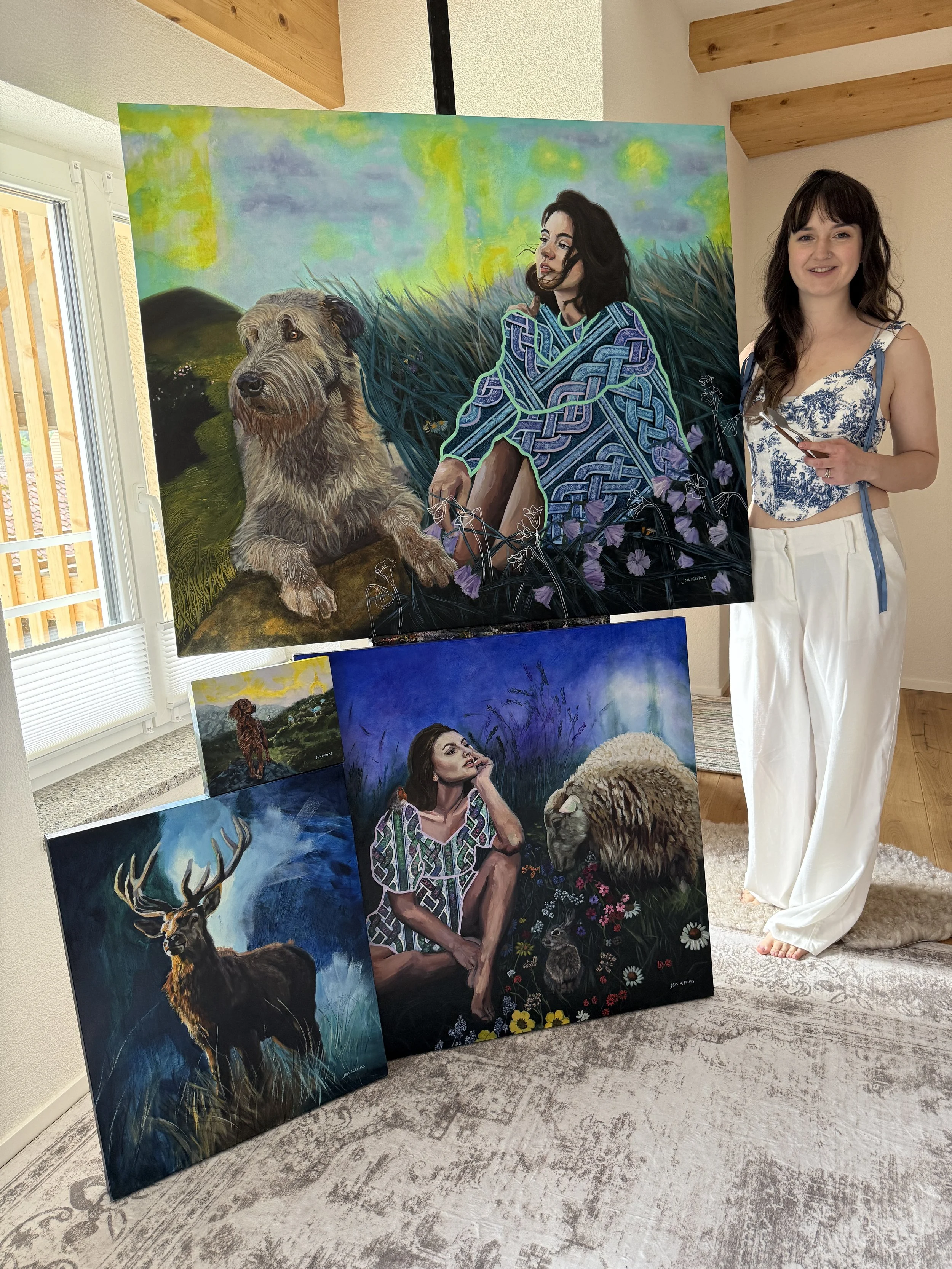
The figures and animals always come from photographic reference or from sketches I make from life. I build the main subjects from reality.
But the atmosphere, the space around them, the emotional direction, the colour choices, they all come from somewhere more imaginative.
The final paintings are constructed, layered, adjusted. Rarely a single image. More like assembling fragments until something clicks into place.
Another misconception is time.
People often assume a painting takes far longer than it does, especially my larger pieces. But what actually takes time isn’t the physical act of painting, it’s uncertainty. When I know where something is going, the work moves quickly. A small piece can take just as long as or even longer than a large one if the internal direction is unclear.
It’s not size that creates duration. It’s clarity.
When a painting “clicks”
There’s a moment that’s hard to describe without making it sound abstract or overly symbolic, but it’s very physical.
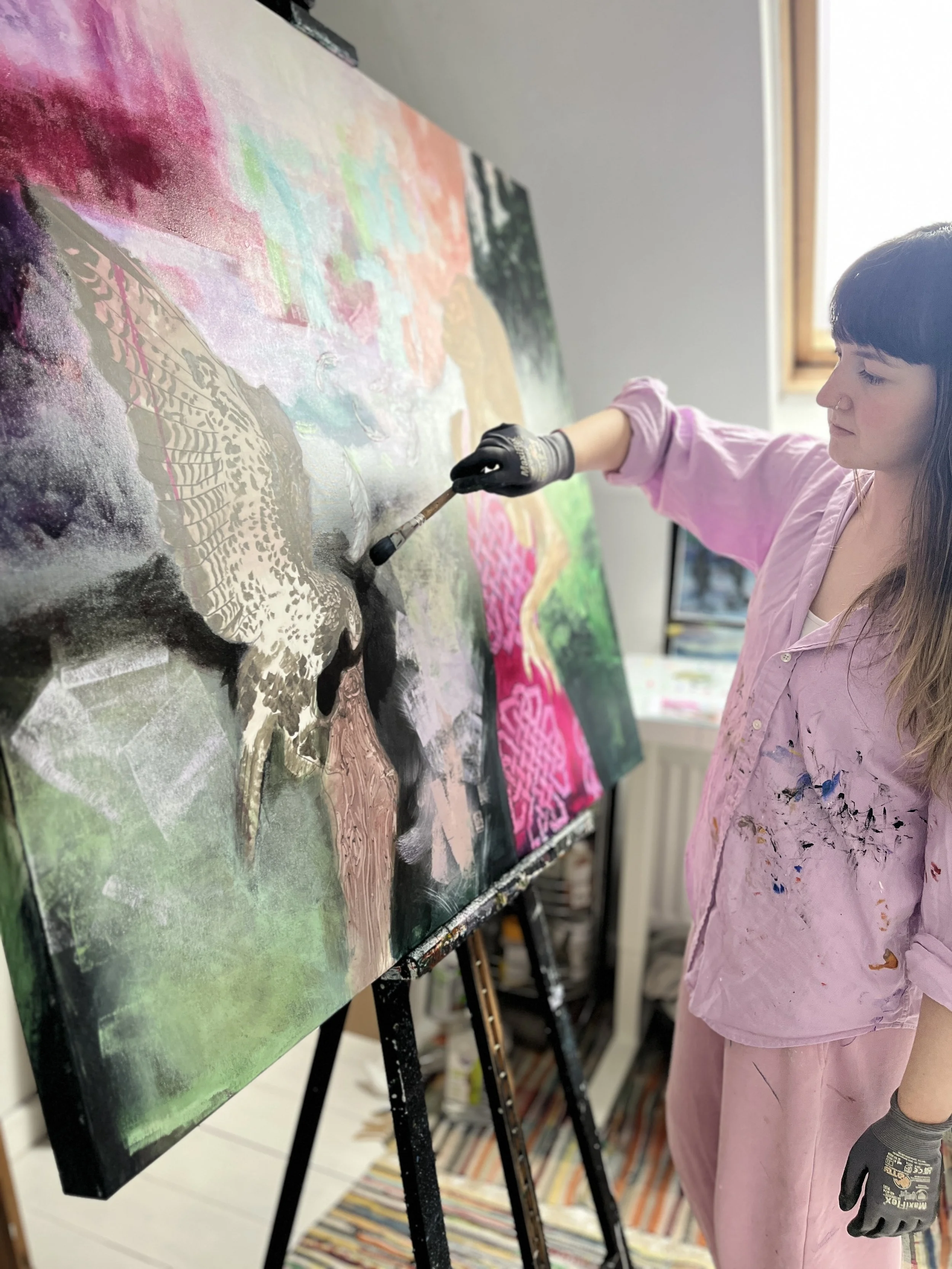
Sometimes it’s just a single mark. A brushstroke. A shift in tone.
And suddenly the piece changes.
It starts to feel like it’s “alive” in a way it wasn’t before. There’s a kind of internal recognition, usually it’s like a tightening in my chest or in my stomach. It’s the same sensation that appears when an idea first arrives.
That feeling is how I know something is working.
If I don’t feel it, I don’t trust the piece yet.
And sometimes I’ll leave work aside until it can be resolved later. Not because it’s failed, but because it hasn’t revealed itself yet.
Interestingly, other people sometimes connect with those same “unfinished” pieces immediately, even when I can’t. That realisation has become important to me, it shows that my work isn’t only happening inside my perception of it, and very much confirms the idea that art is subjective.
What the work is actually about
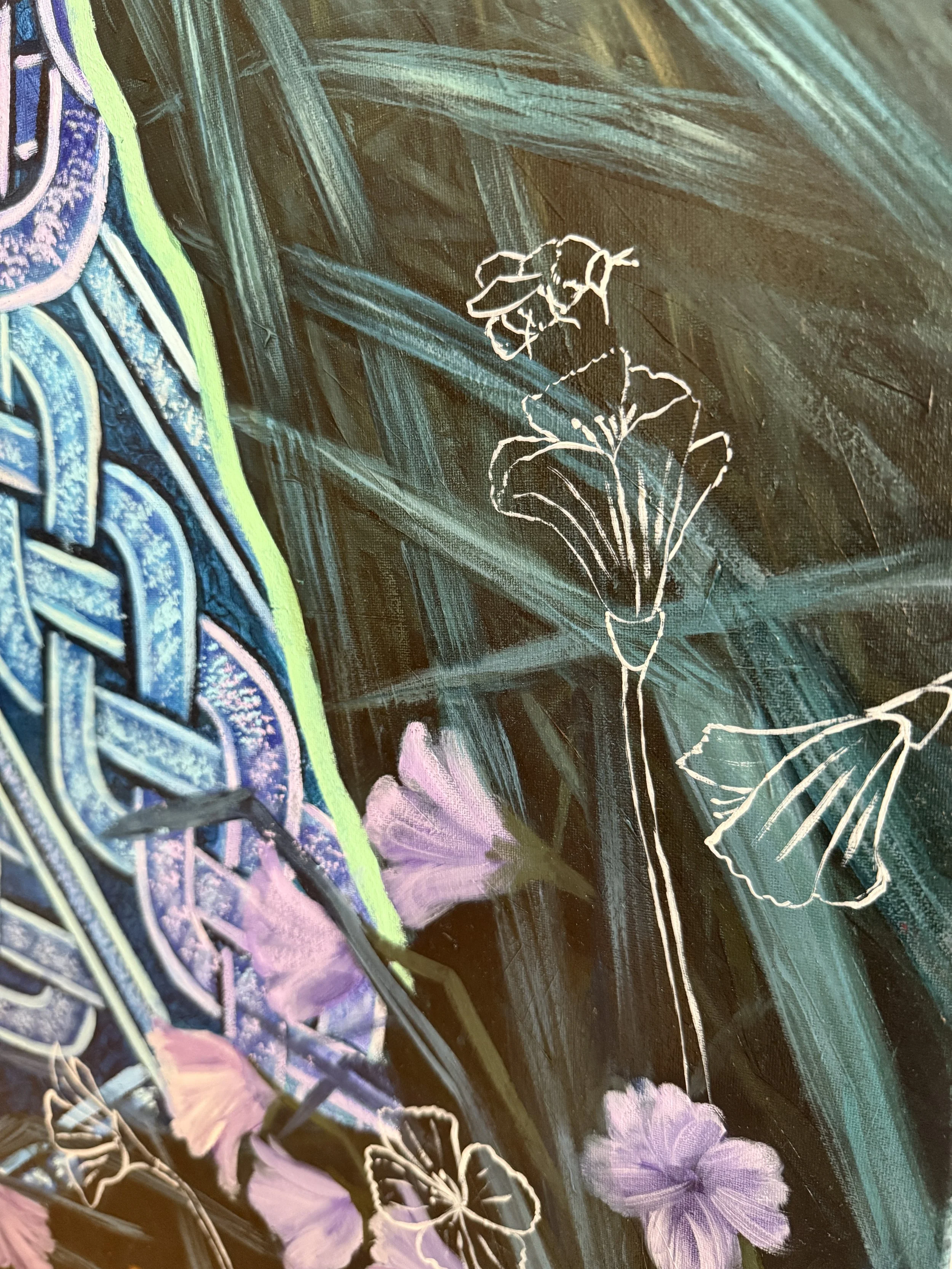
On the surface, there are figures, animals, landscapes, abstraction. Underneath that, it’s harder to name.
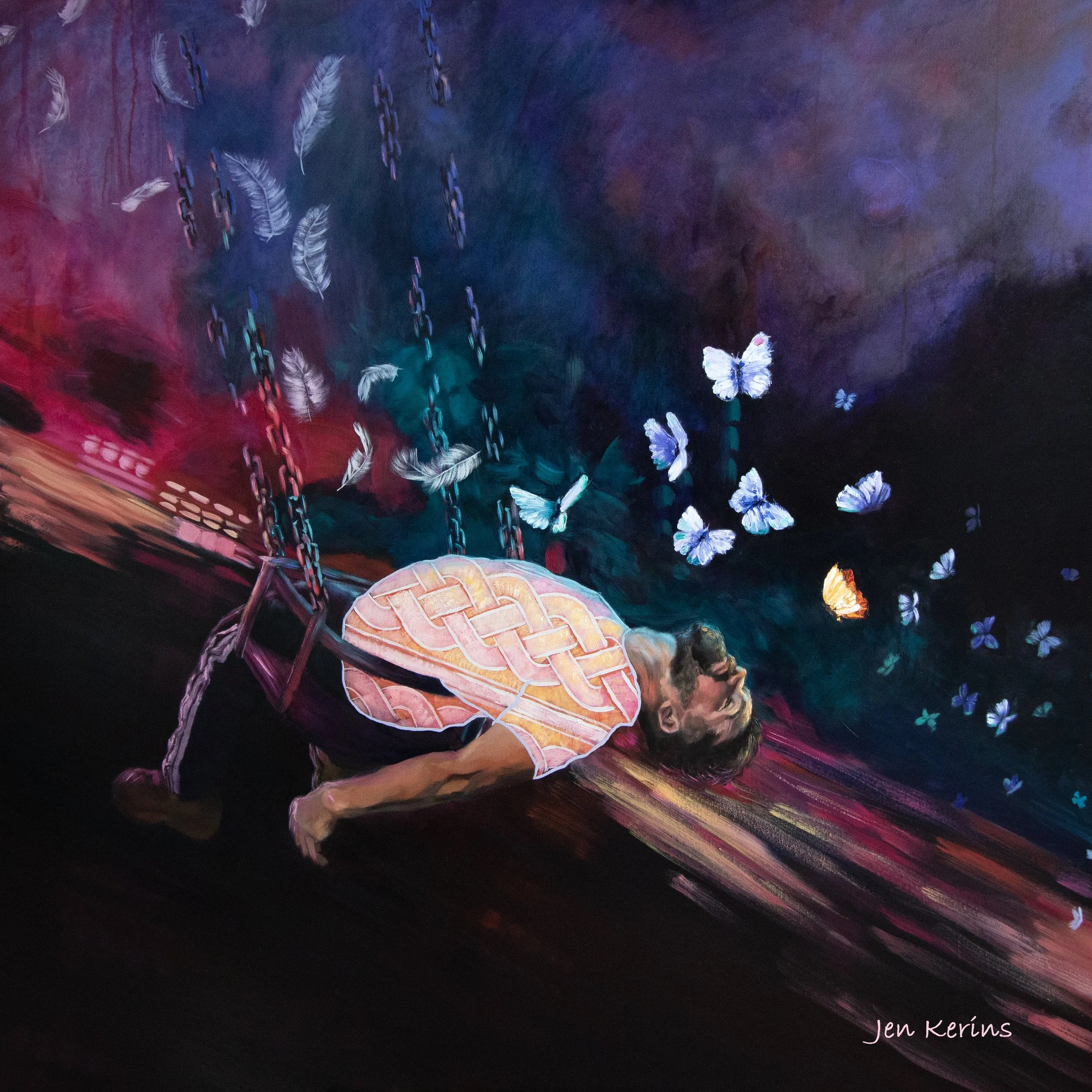
These paintings are connected to ideas I don’t always have language for; beliefs about human potential, identity, spirituality, and our relationship to language, nature and place. They come from a sense that people are capable of more than they usually allow themselves to believe.
They also come from my own internal contradictions.
Doubt and trust existing at the same time.
Uncertainty about capability, but also a deep pull to keep going anyway.
At their core, the paintings are symbols. Not in a literal sense, but as containers for things like strength, power, beauty, tension, and meaning.
They’re a way of translating something internal into something visible.
What I want the viewer to experience
When someone stands in front of one of my paintings, I don’t want them to just observe it. I want it to feel like it’s pulling them in. Like there is something in the painting that recognises something inside them. Something they had forgotten, or lost touch with.
If it works, I want it to create a shift, even if subtle.
A sense of strength. Presence. Clarity. Confidence.
Something that feels grounded but alive.
There have been moments where I’ve seen this happen unexpectedly. One that stayed with me was a message from someone who cried after seeing one of my paintings online, completely unplanned, in a room full of people. It wasn’t something I expected or aimed for, but it showed me how direct this kind of visual language can be when it connects.
Why I make this work
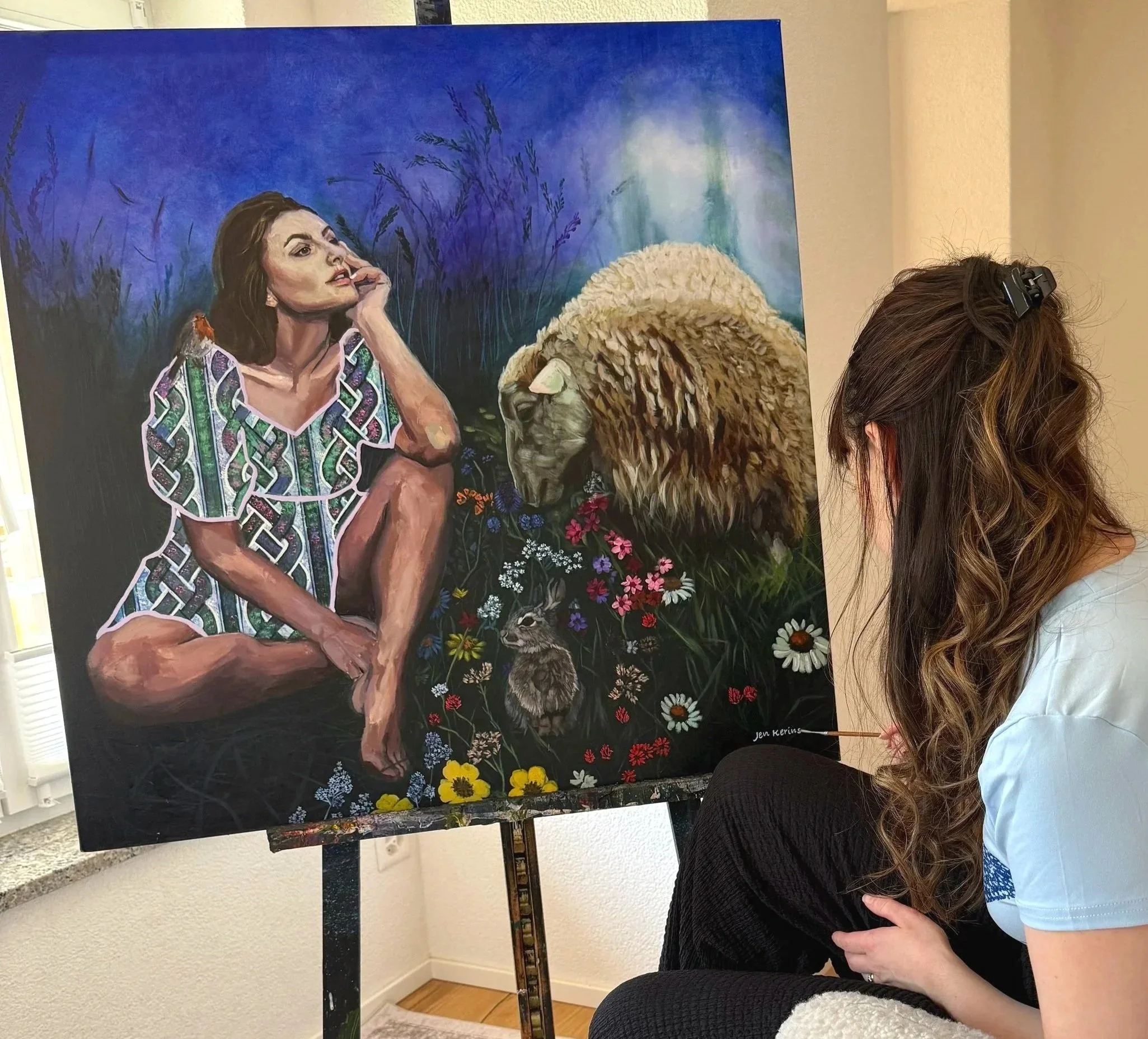
There are ideas and images that arrive before I can explain them. Sometimes I don’t have words for what I want to say at all. Painting becomes a way of giving those things form. It also becomes a way of working through inner conflict, translating something abstract inside me into something physical that I can see and respond to. At times, it feels like the work is happening faster than my ability to explain it. That gap is part of why I keep making it, its as though there is a jumbled up puzzle in my mind and the only way to see what it is is to piece it together.
The part of me that is inside the work
There’s a version of myself that shows up most clearly in the studio.
It isn’t the cautious or self-doubting part.
It’s the part that trusts instinct more than it needs certainty.
The part that is willing to take risks, follow ideas without knowing where they lead, and believe that there is something larger at play than immediate fear or hesitation.
That version of me is more present in my paintings than in everyday life.
Where I am right now
Recently, there has been a shift in how I approach my work. It feels like I’m being pulled in slightly different stylistic directions at the same time, and I haven’t fully figured out how they will merge yet. But I can feel that something is forming underneath it.
There’s uncertainty there, too, especially around financial stability and what it means to build a sustainable practice. But I’ve learned not to let that define the direction of the work itself.
My work needs to stay honest first. Everything else follows from that. And I know I don’t want my paintings to become decorative, or performative, or shaped around trying to appear more important than they are.
They are simply an expression of what feels real to me.